Floral Embroidery Pattern: A Designer's Practical Review
When I download a new embroidery file, especially one categorized as a Bouquets Bunches design, my first instinct isn’t just to admire it on screen. I immediately start visualizing it stitched out, considering what kind of project it truly belongs to, and whether it will deliver the value my work—or a client’s project—requires. This Floral Embroidery Pattern demands that kind of practical evaluation from the moment you see it.
The Immediate Mood: Timeless, Not Trendy
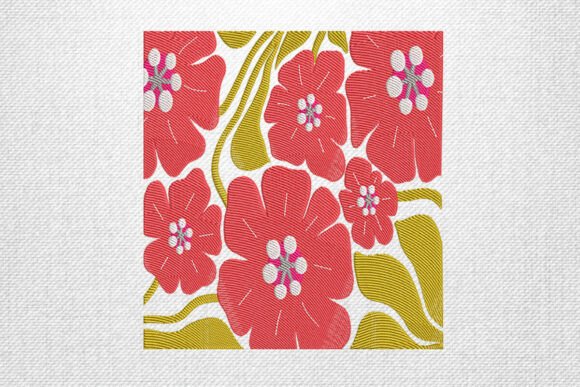
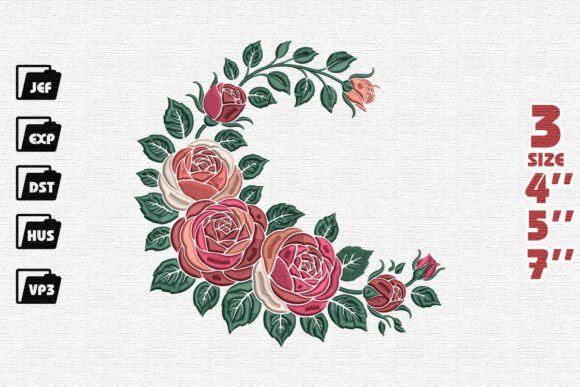
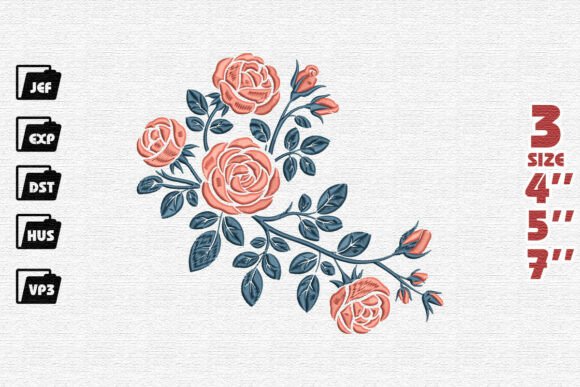
The description mentions “timeless elegance,” and that’s precisely the first impression. This isn’t a bold, abstract floral; it’s a classic rose branch spray. The layout suggests a natural, organic flow rather than a rigid, symmetrical arrangement. This creates a certain mood: gentle, romantic, and sophisticated. Its visual personality leans toward heritage and handmade warmth, making it feel like it belongs on items meant to carry sentimental weight or convey a sense of crafted care.
For my craft business, this tells me it’s a strong candidate for personalized gifts, boutique products like pillow covers or kitchen towels, and wedding or anniversary items. It wouldn’t feel out of place embroidered on a linen apron for a thoughtful holiday gift or as a focal point on a nursery decor blanket. The theme is versatile because classic florals rarely alienate a buyer; they invite engagement through universal appeal.
Where This Design Performs Brilliantly in Real Projects
Thinking through real-life embroidery situations, I see several clear winners for application. On custom apparel like a high-quality sweatshirt or a denim jacket, this Floral Embroidery Pattern would act as a statement piece without being overpowering. The detailed roses would translate into a beautiful interplay of fill stitch and likely satin stitch accents, adding perceived value to the garment.
For Etsy sellers and small shop owners creating handmade products, this design shines on tote bags and pillow covers. These items have ample, flat space that allows the entire spray to be appreciated. As a digital product seller, this file is a solid design asset for creating printable mockups for baby embroidery or wedding gift collections, because its classic nature easily conveys a premium feel. In commercial embroidery for a local boutique’s branded merchandise, it could elevate a simple tea towel or apron into a compelling shelf product.
The Careful Considerations: Where to Proceed with Caution
Any experienced embroiderer knows that a beautiful on-screen design can present challenges in execution. The detail level here—several roses in full bloom—implies potentially dense stitch areas. On very small hoop sizes, those details might lose clarity, becoming a muddled puff of thread rather than distinct flowers. This is a caution for projects like caps or curved surfaces where the design area is constrained; a scaled-down version might need testing.
Texture and fabric color matter immensely. On dark fabric, the choice of thread colors becomes critical to maintain the design’s luminosity. On thin or stretchy fabrics like a t-shirt, proper stabilizer is non-optional to prevent puckering and distortion, especially if the stitch density is high. For products destined for frequent washing, like baby clothes or kitchen linens, a robust stitch construction is key for longevity, so testing on scrap fabric first is a mandatory step.
Practical Notes Before You Hit "Start" on Your Machine
My workflow always includes a few practical checks. For this floral embroidery pattern:
- Test on scrap fabric first. Use both a light and a dark background scrap to judge thread color contrast and how the details emerge.
- Review stitch density in the actual embroidery file by stitching a sample. High density on a tote bag is fine; on a lightweight cap, it might be too stiff.
- Confirm the effective hoop size needed. Does the design’s shape fit well in a standard hoop for your target product, like a 5x7 for a pillow cover?
- Inspect the smallest details. Are there tiny elements that might vanish on textured fabrics? A quick stitch-out reveals this.
- Consider licensing. Before selling finished items or using it in commercial embroidery projects, verify the license terms for this digital embroidery file.
How This Pattern Translates into Customer Perception
Beyond the technical execution, the real test is how the finished product feels to a buyer or recipient. A well-embroidered Floral Embroidery Pattern on a handmade product increases visual appeal through its recognizable, classic beauty. Stitching clarity translates directly into customer trust—a crisp, clean outcome signals professionalism and care.
For a creative entrepreneur, using such a coherent design across a line of products—say, aprons, towels, and totes—can bolster brand consistency. Its giftability is high because florals, particularly roses, carry an inherent message of affection. For an apparel decorator, applying this to a custom order for a personalized gift almost guarantees a positive reaction; it’s a safe choice that feels special.
Ultimately, this embroidery design is a reliable, versatile tool. It won’t suit every project—the careful considerations are real—but for the vast majority of applications where a touch of timeless elegance is the goal, it performs. It’s a pattern that, when stitched with attention to fabric, stabilizer, and color, becomes more than just an embroidery file; it becomes the heart of a valued finished product.